I've paid about $50 for a Carnival cruise more than once — through casino offers, not luck. Here's how the Players Club and "coin-in" actually work, and the honest part the "free cruise" videos leave out.
A few months back I sailed Carnival Firenze out of Long Beach and my cruise fare was about fifty bucks. Not a typo, not a flash sale, not a jackpot. A casino offer. I've done it more than once, and it's the single biggest lever on cruise cost that almost nobody explains honestly — because the people making "I CRUISE FOR FREE" videos leave out the part that actually matters.
So here's the honest version: how casino offers really work, what they really cost, and who should actually bother.
How the offers actually happen
Every Carnival ship has a casino, and the casino runs the Carnival Players Club — free to join, 18 and up. There's no separate card; your Sail & Sign card tracks your play, and your Player ID follows you from cruise to cruise. Put the card in the slot machine, or hand it to the table dealer, every single time you play — if you don't, none of it counts.
As you play, you earn Casino Points. On slots it's one point for every $2 of coin-in. Rack up enough and two things happen: onboard, the comps start — free drinks while you're actively playing kick in around 1,000 points on a short sailing — and afterward, Carnival starts mailing and emailing you offers. Free or deeply discounted cabins, free play, "drinks on us" sailings. That's the engine. Play, get tracked, get offers.
The one word that changes everything: coin-in
Here's what the free-cruise crowd glosses over. Your offers are built on coin-in — the total amount you cycle through the machine — not on what you lose. Those are wildly different numbers.
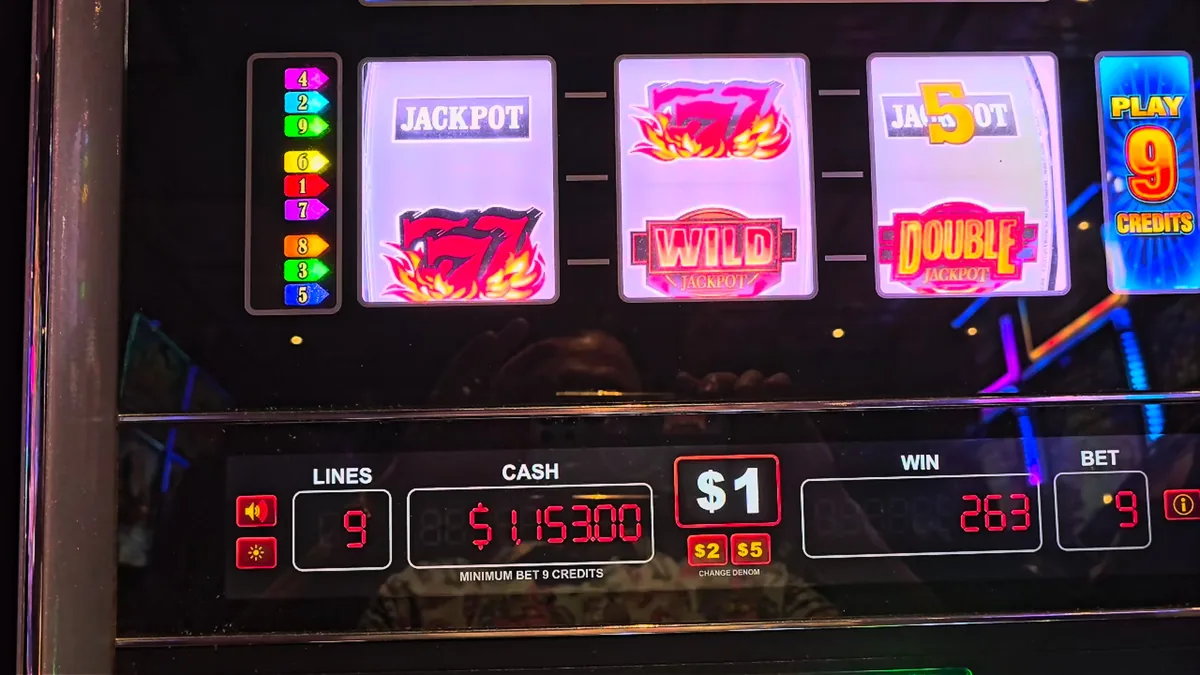
Say you sit down with $300. You bet, you win some, you bet the winnings, you win some more, you bet again. By the end of the night you might have run $2,000 of coin-in through that machine while only being down $120 of your actual money. The casino tracks the $2,000. Your wallet only feels the $120.
That gap is the whole game. The skill isn't winning — it's building coin-in while keeping your real losses small.
Dave's take: I got a little obsessed with this and ran an experiment on Radiance — I tracked roughly $17,000 of coin-in across the sailing and paid close attention to what it actually cost me versus the offers it generated. The scary-looking number is never the one that matters. Coin-in piles up fast when you're recycling winnings; your real out-of-pocket is a fraction of it. Understanding that one distinction is what turns "I could never afford to gamble" into "oh — that's how people do this."
— Dave Giovacchini
Now the part nobody puts in the thumbnail
I'm not going to sell you a fantasy. Here's the honest math.
The house always has an edge. Over time, coin-in costs you money — that's the entire reason casinos exist. A "free" cruise you earned by donating $1,500 to a slot machine is not free; it's a $1,500 cruise with extra steps. The offers are also genuinely unpredictable: I've seen people earn 20,000 points and get a mediocre half-off offer while someone who played less got a free week. There's no published formula, and anyone who tells you there's a guaranteed system is selling something.
So the rule is simple. This only makes sense if you already enjoy gambling and would spend some money in a casino anyway. If that's you, the offers are a real and large discount on something you were going to do regardless. If it's not you — if you'd be starting to gamble in order to "save" on a cruise — walk away. That math never works, and it's how people get hurt.
Dave's take: When I do play, I set a hard number before I sit down and I stop at it, full stop. I play for coin-in, not for the moon — steady, lower-drama machines, card always inserted, free drinks once I hit the threshold. Then I let the offers come and book the cheap sailing they unlock. That's how a Firenze cruise out of Long Beach ended up costing me about fifty bucks plus port fees. The fare was cheap because I'd already had my fun on a previous cruise — not because I chased it that week.
— Dave Giovacchini
How to actually do it (if you're the right person for it)
- Join the Players Club and insert your card every time. Uncarded play earns you nothing.
- Set a hard bankroll before you sit down. Decide what you're willing to lose, and treat it as spent the moment you sit.
- Play for coin-in, not jackpots. Lower-volatility machines keep your money in play longer, which builds points without bleeding you out.
- Earn the free drinks. Around 1,000 points on a short sailing unlocks complimentary drinks while you play — a real perk that quietly offsets skipping the drink package.
- Wait for the mailers and email offers. They come after the cruise, based on your play. Each has an expiration and limited cabins, so move when a good one lands.
- Use the offer on a cheap base sailing, then decide whether paying to upgrade the cabin is worth it.
The bottom line
Casino offers are the most powerful discount in cruising, and they're completely real — I've used them, and my fare has genuinely been a rounding error more than once. But they are not free, and they are not for everyone. They're a tool for people who'd gamble anyway, used with discipline. If that's you, learn the coin-in game and the offers will follow. If it's not, no shame in it at all — the rest of this site is full of ways to bring the number down without ever touching a slot machine.