Connecting cabins on a cruise typically cost 20–40% more than booking two standard interior cabins separately, ranging from $150–$450/person/night depending on the ship, cabin category, and itinerary — but for families who need the shared door, the premium is usually worth it.
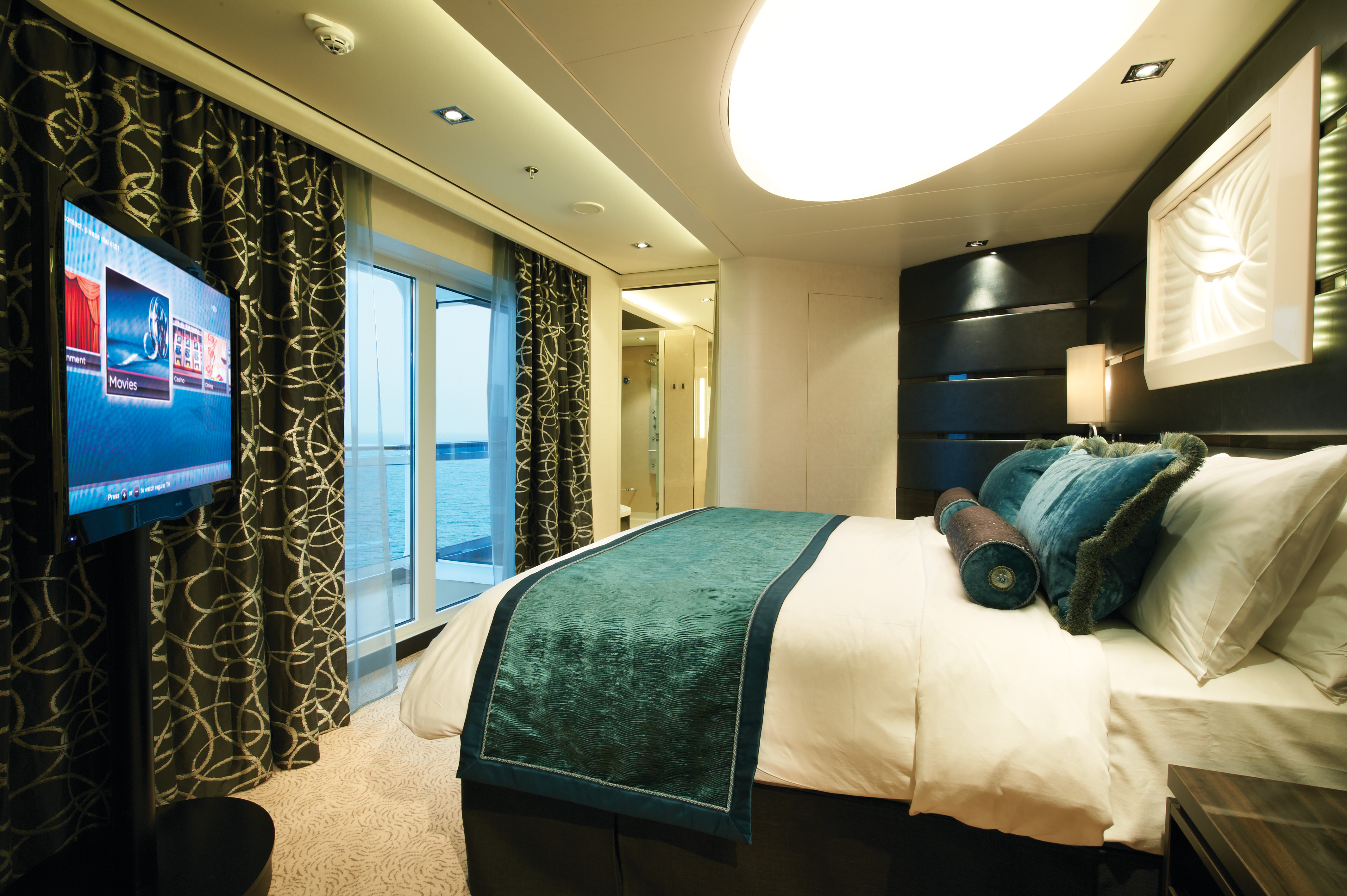 Photo: Norwegian Cruise Line
Connecting cabins sell out faster than almost any other category on family-popular ships. If you wait until 60 days out to book one, you'll either pay a panic premium or settle for two cabins on opposite ends of deck 7 with a 10-year-old in between.
What Connecting Cabins Actually Cost in 2025–2026
The price of a connecting cabin pair depends on the cruise line, ship class, sail date, and how far in advance you book. Here's the honest breakdown across budget tiers:
| Tier | Cabin Type | Cost Per Person/Night (per cabin) | Total for 2 Cabins (4 people, 7 nights) |
|---|---|---|---|
| Budget | Interior connecting (Carnival, MSC) | $75–$120/pp/night | $2,100–$3,360 |
| Mid-Range | Ocean View or Balcony connecting (Royal Caribbean, Norwegian) | $150–$250/pp/night | $4,200–$7,000 |
| Splurge | Balcony or Suite connecting (Celebrity, Disney, Princess) | $280–$450/pp/night | $7,840–$12,600 |
Important caveat: These are per-person rates based on double occupancy per cabin. A family of 4 (2 adults + 2 kids) in two connecting interior cabins on Carnival might pay as little as $2,100 total for a 7-night Caribbean cruise if booked early with a sale fare. Disney connecting cabins at peak summer will blow past $12,000 without blinking.
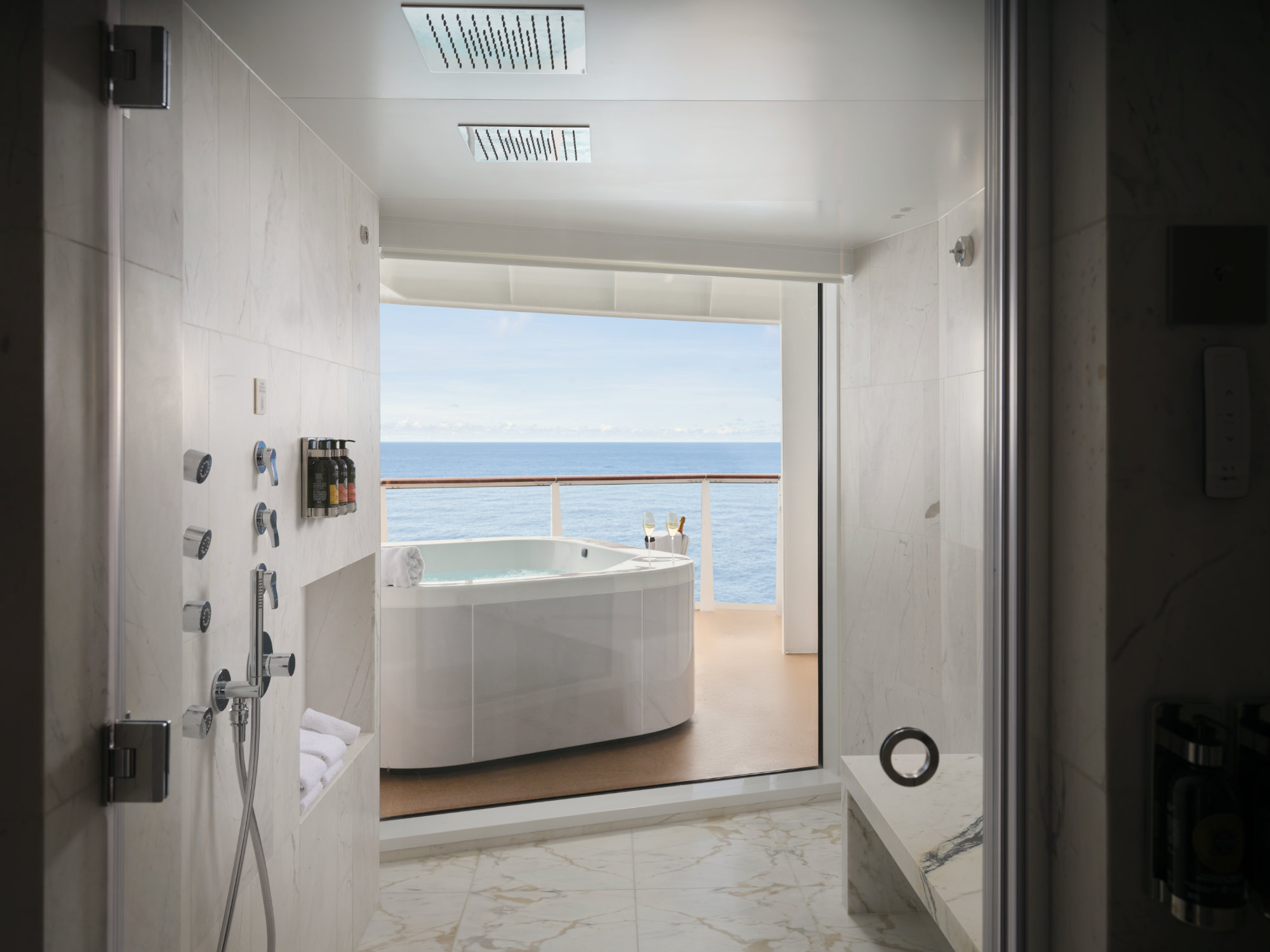 Photo: Norwegian Cruise Line
Key Factors That Drive the Cost of Connecting Cabins
1. Scarcity — this is the biggest one. Connecting cabins make up only 5–15% of inventory on most ships. Royal Caribbean's Wonder of the Seas has more than most, but even there, connecting balcony cabins are gone 9–12 months out for summer sailings. Scarcity = leverage for cruise lines = higher prices.
2. Cruise Line Brand Tier Carnival and MSC offer the most affordable connecting options. Disney charges a significant premium for the privilege — expect to pay 30–50% more than Royal Caribbean for a comparable connecting cabin category. Celebrity and Princess fall in the middle.
3. Cabin Category Connecting interiors are cheapest. Connecting balconies are the sweet spot for most families — you get outdoor space and the shared door. Connecting suites (available on Royal Caribbean's Icon class and Disney) can run $500–$900/person/night.
4. Itinerary and Season Caribbean sailings in June–August and December–January carry the highest premiums. Alaska and Mediterranean connecting cabins are more available in shoulder season (May, September) at 15–25% lower rates.
5. How Many Kids You Have Some connecting cabins allow a third or fourth guest in each room (with pull-down Pullman beds or sofa beds). A family of 5 or 6 can sometimes fit into two connecting cabins and pay per-person rates that drop significantly compared to booking a suite. Always ask about max occupancy before booking.
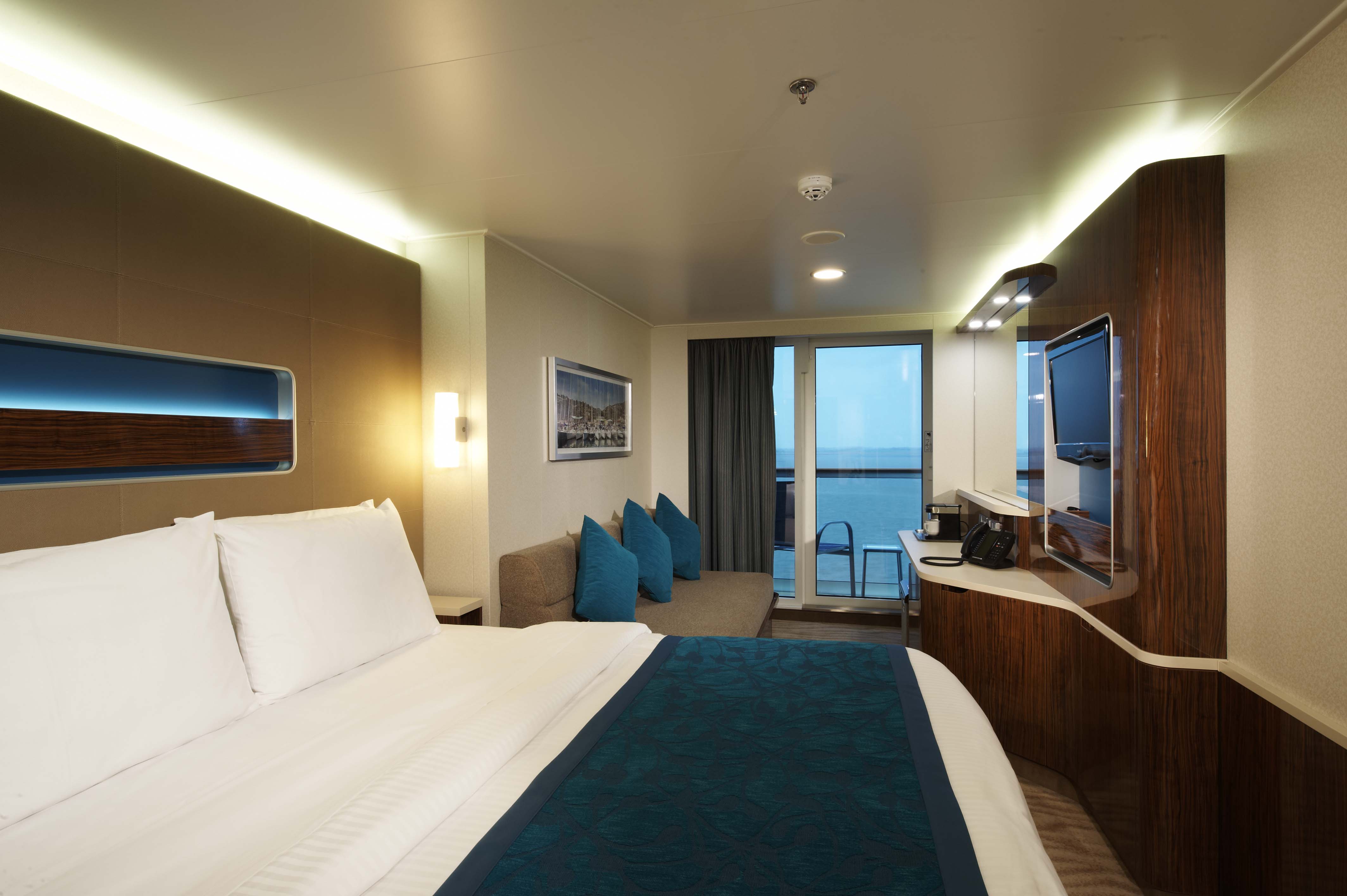 Photo: Norwegian Cruise Line
Practical Tips to Save Money on Connecting Cabins
Book 12–18 months out — non-negotiable for summer sailings. Connecting cabin inventory disappears first. If you're flexible on dates, aim for January–March Caribbean sailings or late September Mediterranean itineraries where you'll save 20–30% vs. peak season.
Call, don't click. Most cruise line websites don't clearly flag connecting cabins in search results. Call the cruise line directly (or a travel agent with cruise specialization) and ask specifically for adjoining cabin pairs. You may find inventory the website doesn't surface.
Compare the math: connecting vs. one large cabin. A Royal Caribbean Family Ocean-View cabin that fits 4–6 people often costs less than two connecting balcony cabins and keeps the family together. Run the numbers both ways.
Watch for kids sail free promotions. Carnival, Royal Caribbean, and Norwegian all run kids-sail-free deals that specifically apply to 3rd and 4th guests in a cabin. If you can squeeze 3 people into one connecting cabin, the free-kid promotion can slash your total cost by $500–$1,500 per sailing.
Use guarantee cabin bookings cautiously. Guarantee bookings (where the cruise line assigns your cabin) almost never guarantee connecting rooms. Book connecting cabins with a specific cabin number, always.
Look at repositioning cruises. Transatlantic and Panama Canal repositioning itineraries frequently have unsold connecting cabin inventory. Rates can be 40–60% below standard Caribbean pricing for the same cabin category.
Which Cruise Lines Are Best for Family Connecting Cabins?
| Cruise Line | Connecting Cabin Availability | Best For | Approx. Premium Over Standard |
|---|---|---|---|
| Royal Caribbean | Excellent (especially Icon, Wonder class) | Families who want lots of ship activities | 25–35% |
| Disney Cruise Line | Good, but books extremely early | Families with young kids, Disney fans | 35–50% |
| Carnival | Good on larger ships | Budget-conscious families | 20–30% |
| Norwegian | Moderate | Families who want freestyle dining flexibility | 25–40% |
| MSC | Good on Seashore/Seascape | Budget families, European itineraries | 15–25% |
| Celebrity | Limited | Older kids, more refined experience | 30–45% |
| Princess | Moderate | Multi-gen families, longer itineraries | 25–35% |
Royal Caribbean is the overall winner for value and availability — particularly on the Icon-class ships, where connecting balcony cabin pairs are more plentiful than on almost any competitor. Disney wins on experience but charges accordingly.
For the best shot at locking in a connecting cabin before they vanish, check availability through CruiseHub — you can search by cabin type and filter for specific room numbers, which makes finding adjacent connecting pairs much easier than guessing on the cruise line's own site.
Before you book anything, run your specific itinerary and family size through CruiseMutiny to see whether two connecting cabins, a family suite, or a large single cabin actually comes out cheaper for your situation — because the answer changes depending on the ship, sail date, and how many kids you're bringing.