Connecting cabins are two adjacent staterooms linked by a private interior door, letting families or groups share space without sharing a room. Expect to pay a 15–30% premium over standard cabin prices, which typically means an extra $200–$600 per cabin for a 7-night cruise.
 Photo: MSC Cruises
Connecting cabins sound simple — two rooms with a door between them. But book the wrong ones and you'll pay a significant premium for a door you barely use, or worse, discover the 'connecting' cabins your travel agent sold you are actually just adjacent rooms with no interior access at all. Here's exactly how they work and what they actually cost.
What Connecting Cabins Actually Are (and Aren't)
A true connecting cabin setup means two staterooms share a private interior door that can be opened from both sides, creating a larger combined living space. When the door is open, you get a suite-like footprint — two sleeping areas, two bathrooms, and shared access without stepping into a public hallway.
What they are NOT:
- Adjacent cabins — next-door rooms with no interior door (common upsell confusion)
- Adjoining cabins — a term used loosely by some lines, sometimes meaning connecting, sometimes not
- Family suites — single large rooms marketed to families (different product entirely)
Always confirm with the cruise line directly that the booking includes a lockable interior connecting door — not just nearby cabin numbers.
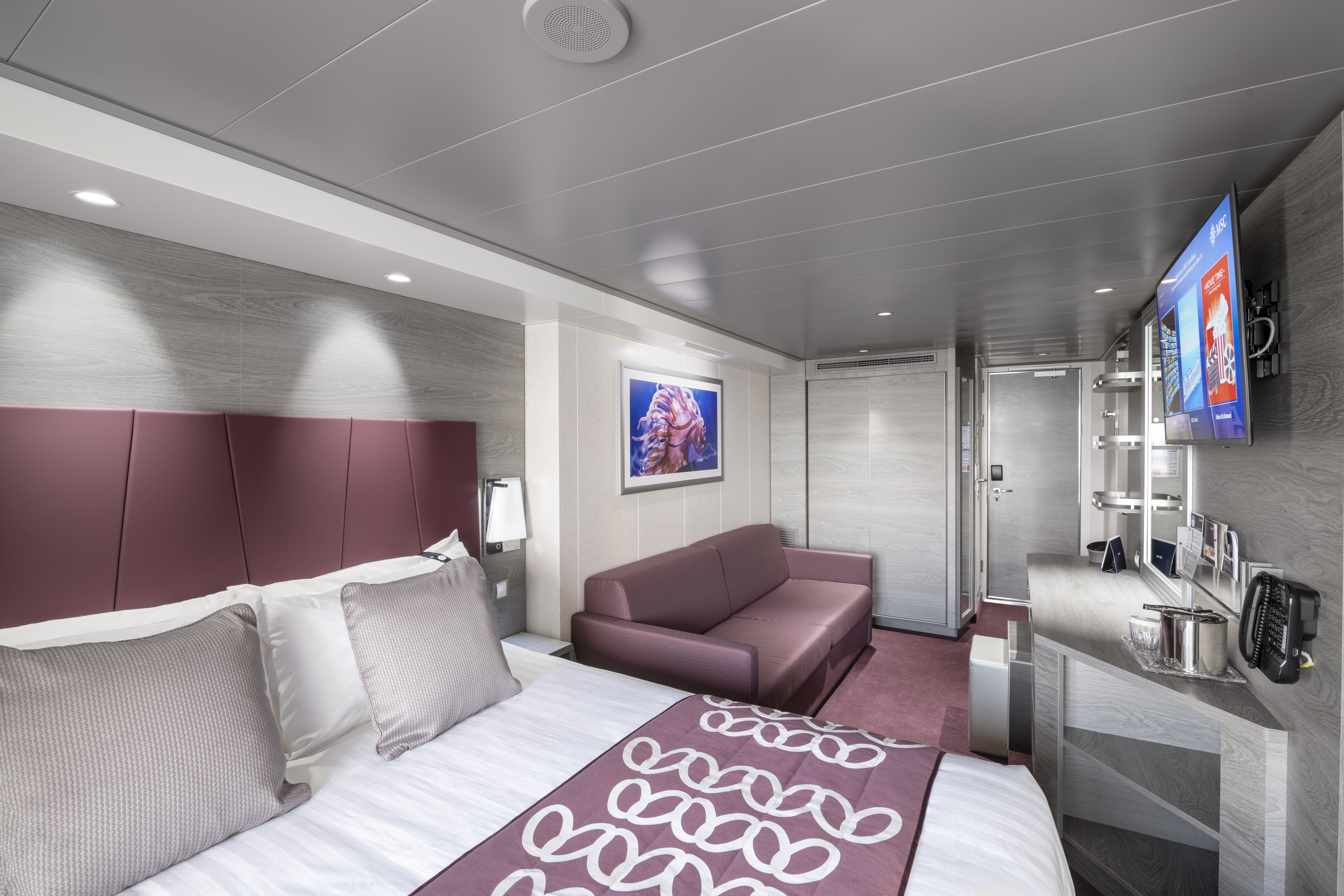 Photo: MSC Cruises
How Much Do Connecting Cabins Cost?
Connecting cabins carry a premium because inventory is limited and demand from families is high. The surcharge typically runs 15–30% above the equivalent standard cabin rate on the same ship.
| Tier | Cabin Type | Per Cabin Cost (7-Night) | Total for Both Cabins | Best For |
|---|---|---|---|---|
| Budget | Inside connecting (Carnival, MSC) | $550–$750 | $1,100–$1,500 | Families on a tight budget |
| Mid-Range | Ocean view or balcony connecting (Royal Caribbean, Norwegian) | $900–$1,400 | $1,800–$2,800 | Families wanting outdoor space |
| Splurge | Balcony connecting (Celebrity, Princess) | $1,400–$2,200 | $2,800–$4,400 | Multi-gen families or two couples |
| Premium | Suite-class connecting (Disney, Virgin Voyages) | $2,500–$5,000+ | $5,000–$10,000+ | Luxury family travel |
Prices are per-cabin estimates for 2025–2026 sailings, based on double occupancy, before taxes and fees. Caribbean 7-night itineraries used as baseline.
The connecting premium itself — what you're paying above two standard equivalent rooms — typically runs $150–$400 extra per cabin on mainstream lines. That's $300–$800 total for the privilege of the interior door.
Key Factors That Drive Connecting Cabin Costs
1. Cabin category matters enormously Inside connecting cabins are the cheapest entry point, but balcony connecting rooms are far more popular (and pricier). The balcony question is real: two connected balcony cabins don't always have adjoining balconies — sometimes they're separated by a divider. Ask before you book.
2. Ship and cruise line Disney Cruise Line has some of the best connecting cabin inventory in the industry but charges accordingly — their connecting cabins often run 20–35% above standard. Royal Caribbean and Carnival have large fleets with good availability but thinner premiums. MSC often has the lowest connecting cabin surcharges of any major line.
3. Sailing season and demand School holiday sailings (summer, spring break, December) see connecting cabin inventory disappear first and prices spike hardest. Book 6–12 months out for peak family sailing weeks — connecting cabins sell out faster than any other category.
4. Number of occupants Cruise lines price by occupancy. If you're putting 3–4 people in one of the two connecting rooms, the per-person cost drops significantly. Families who can max out occupancy in both rooms get the best effective per-person rate.
5. Booking flexibility (or lack of it) Connecting cabins are a specific inventory category. You can't just pick any two rooms and request a door. The ship's configuration dictates where they exist, which means less price flexibility and fewer last-minute deals.
 Photo: MSC Cruises
How to Save Money on Connecting Cabins
Book early — this isn't optional Connecting cabins are 5–15% of total cabin inventory on most ships. On a 3,000-passenger ship, there might be 80–120 connecting pairs. They go fast. Early booking is the single biggest money-saver because pricing often rises steeply as availability tightens.
Compare inside + balcony vs. two balconies A common money-saving strategy: book one inside connecting cabin and one balcony connecting cabin. The kids sleep in the inside room (they don't care about the view), adults get the balcony. You save $300–$600 vs. two balcony connecting rooms while keeping the shared door.
Check MSC and Carnival first If budget is the priority, MSC Cruises and Carnival consistently undercut competitors on connecting cabin premiums. Norwegian is mid-pack. Disney and Celebrity charge the most.
Watch for kids-sail-free promotions Royal Caribbean and Norwegian regularly run promotions where children sail free or at steep discounts on the 3rd/4th berth. In a connecting cabin setup, this can significantly reduce the total cost — but read the fine print, as these promos sometimes exclude connecting category bookings.
Ask about guarantee categories Some lines offer a 'guarantee' booking where you get a connecting cabin but don't pick the exact location. These can run 10–15% cheaper than selecting your specific rooms. The tradeoff: you might end up near the elevators or engine room.
Use a family cruise specialist Connecting cabin inventory and pricing isn't always visible on public booking engines. A specialist has direct access to cabin maps and sometimes negotiated group rates. CruiseHub (https://book.cruisehub.com/swift/cruise?referrer=dave&siid=191861) is worth checking for current connecting cabin availability and pricing across lines.
Which Cruise Lines Have the Best Connecting Cabin Options?
| Cruise Line | Connecting Cabin Availability | Premium vs. Standard | Notes |
|---|---|---|---|
| Disney Cruise Line | Excellent — built for families | 25–35% | Best interior door setup; concierge connecting available |
| Royal Caribbean | Very good on newer ships | 15–25% | Oasis-class ships have the most pairs |
| Norwegian | Good | 15–20% | Haven connecting suites are exceptional but pricey |
| Carnival | Good | 10–20% | Best budget option; no-frills but functional |
| MSC | Good on newer ships | 10–18% | Lowest premiums; YC (Yacht Club) connecting available |
| Celebrity | Limited | 20–30% | Fewer options; suite-class connecting is excellent |
| Princess | Good | 15–22% | MedallionClass ships have solid family inventory |
| Holland America | Limited | 20–28% | Not a family-focused line; lower demand but fewer options |
Best overall for families: Disney for experience, Royal Caribbean for selection, Carnival for value.
Best for adult groups (two couples): Norwegian Haven connecting suites or Celebrity connecting sky suites — you get butler service and privacy in one package.
The Bottom Line on Connecting Cabins
Connecting cabins are genuinely worth the premium for families with young kids or multi-generational groups — the ability to move between rooms privately is a real quality-of-life upgrade at sea. But the premium is real ($300–$800 extra for a week), inventory is tight, and the terminology is confusing enough that booking errors are common. Verify you're getting an actual interior door, book 6–12 months out for any school-holiday sailing, and consider the inside + balcony combo strategy if budget is a constraint.
Before you book, use CruiseMutiny to compare connecting cabin costs across lines and sailings — so you know exactly what you're paying for the door between those two rooms.